

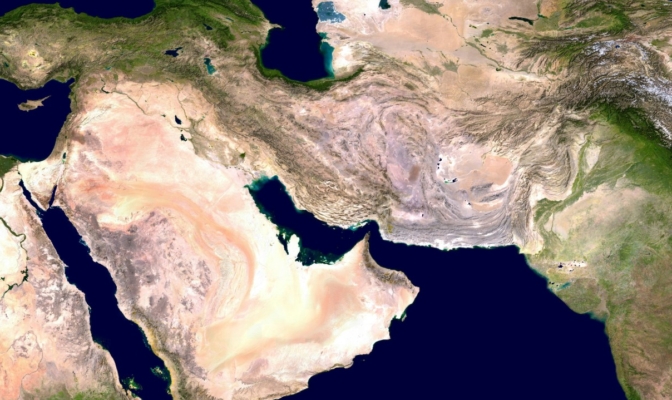
From afar, much is often made of the Middle East’s seemingly perpetual state of instability when compared to other geographies. Whilst the area spanning from the Gulf to the Levant and North Africa is undoubtedly complex and laden with cultural and political nuance, to conflate the whole region as ‘unstable’ would be to oversimplify the variety of a hugely diverse geography.
Throughout the year, events in Palestine and Israel have correctly shocked the world and dominated global news agendas. When viewed alongside the now dubbed ‘twelve-day war’ between Israel and Iran in June, one would be forgiven for assuming the Middle East to be broadly unstable. Whilst a response to that question is clearly multifaceted and dependent on one’s geographic focus, the on-ground reality is different from what is often assumed from afar. Whether one speaks to an Iraqi reacting to the election of the Reconstruction and Development Party, a Syrian about the country’s global reintegration, or a Lebanese on Beirut’s recovery from sustained bombardment, the picture is inextricably diverse and should therefore be analysed that way.
Further south, in the Gulf Cooperation Council (GCC), there is yet another different picture. Economies have continued to prove remarkably resilient to the region’s wider geopolitical shocks, resulting in a positive domino effect of increased private and institutional investment and accelerated GDP growth. As a result, the IMF has upgraded its growth prediction for the UAE to 4.8% in 2025 and 5% in 2026, marking a distinct divergence from the 1.2% and 2.1% figures forecast for Europe and the US respectively. Sustained investment in sectors like AI and digital infrastructure, spearheaded by a trend of sovereign co-investments by the likes of Mubadala, G42, and HUMAIN, is driving such growth with the UAE believed to have attracted a staggering $148 billion in AI and data centre investment since 2024 alone.
Considering this amid a global picture of fragmentation in Europe, and political unpredictability in the US, combined with trends of increased Government spending and underwhelming productivity rates, the GCC is standing out. Favourable and progressive regulation, stable political environments, and strong placement in three of the themes driving the global economy; Technology/AI, Energy, and Defence, are elevating the role of cities like Dubai, Abu Dhabi, Riyadh and Doha. Put far more succinctly during a panel at last week’s Abu Dhabi Finance Week, the GCC’s growth stems from its ability to champion the three D’s:
- Decentralisation: Economic diversification supported by the development of sector-specific free zones and entrepreneurial hubs.
- Decarbonisation: Large scale investment into renewable energy.
- Digitalisation: Government backed AI adoption and large-scale partnerships with Hyperscalers and GPU providers.
Nonetheless, such developments do sit against a backdrop of heightened geopolitical fragility. As asymmetrical conflicts and security threats from non-state actors have continued to increase in both frequency and complexity throughout 2025, long-held ideas of a stability-inducing liberal international order predicated on mutual cooperation and international institutions are arguably no longer applicable to modern-day realities. Recognising and adapting to such risks associated with a more fragmented and multipolar world is therefore essential. Private institutions are already responding – since the start of 2024, KKR, JPMorgan, Bridgepoint and McKinsey, among others, have expanded their capabilities to include dedicated geopolitical analysis units, reflecting a growing consensus that geopolitical awareness is no longer optional but a necessity, particularly for organisations operating across regions with varied risk profiles, such as the Middle East.
Considering all the above, it would of course be unrealistic to suggest that the GCC’s outlook is entirely insulated from risk. External shocks, whether from disrupted Red Sea trade flows, volatile oil prices, or reduced FDI inflows, remain genuine points of exposure for GCC economies. Additionally, in the AI era when 1GW of data centre capacity can cost up to $50bn to operationalise, and 4 year-old startups can raise $900m Series C round, economies such as those in the GCC, where sovereign entities have placed significant financial weight behind what remains a nascent sector, is not without risk.
In summary, and to quote Bradley Cooper’s 2011 classic Limitless (expecting a challenge here), “a share price isn’t really based on how a company works; it’s about how mass psychology works.” Although oversimplified, the quote acts as a useful illustration. Take the GCC: despite a complex geopolitical landscape across the wider region, the Gulf continues to sustain investor confidence and exhibit a strong metaphorical share price, thereby highlighting the limits of relying solely on macro perspectives when assessing the Middle East, or any other region for that matter.
Contact
Charlie Welton, Senior Account Executive
Dubai & UAE