

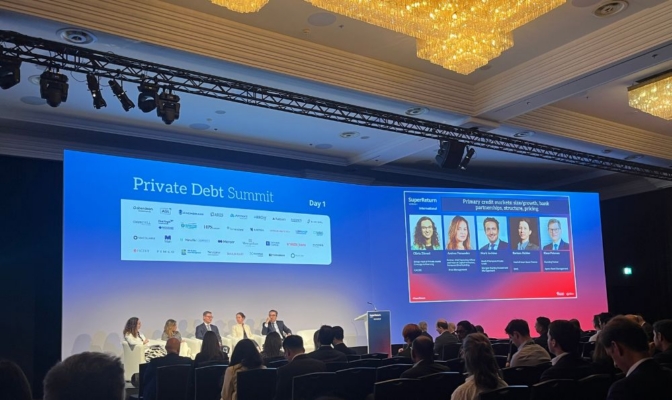
This week, H/Advisors attended SuperReturn in Berlin, joining thousands of delegates from across the private capital industry to discuss the prominent considerations for LPs, practitioners and advisors in what has become an extremely complex investment environment for private equity and private credit GPs. A few themes were prevalent across panels, media interviews and conversations held throughout the week.
AI disruption, and the impact on software portfolios, the risks and opportunities associated with retail and wealth capital, challenges in the private credit market and the escalating geopolitical situation were at the forefront, with noticeable tension between the mainstream press and the private capital industry.
AI and the growing divide in software investing
Given recent headlines and the rapid adoption of AI platforms and tools across the industry, AI was heavily featured in Berlin, both at an operational level for GPs and within portfolio companies. Software investing is becoming more of a winner-takes-most market and, rather than treating software as a broadly attractive asset class, investors increasingly expect a small number of software businesses to generate exceptional returns while others struggle to adapt. Panellists emphasized their software exposure within portfolios and, in some cases, the fact that AI due diligence has been an integral part of the investment process for longer than these headlines have been surfacing.
Retail redemptions: noise, nuance and a potential reset
Retail redemptions were widely discussed and, while sensationalist headlines around fund gating might indicate that the whole market is in freefall, general sentiment was much more pragmatic. In practice, redemptions are severely impacting only a handful of the BDCs, while others are facing a slight increase in redemption requests. Some suggested this could be the reset the market needed to ensure better education and sophistication, resulting in a second wave of retail money flowing into the asset class.
Conflict in the Middle East: the underappreciated risk factor
There was a recurring view that the Middle East has not received sufficient attention in recent discussions and, should the conflict persist, it is likely to have an impact on portfolio company performance. However, given the uncertainty surrounding US policy and military strategy, there is limited willingness to take a definitive view on the duration of the situation. This remains an area to monitor.
A growing disconnect between the media and private capital
Panellists openly criticised the media, particularly during the private debt summit on Day 1 and 2 of the conference, with leading media outlets in the room. Many agree that reporting across the space, but predominantly from the more mainstream financial press, lacks nuance and deep understanding of the lending being undertaken by private credit funds, a space which is not monolithic and varies greatly in risk/reward profile, terms and pricing. First Brands, labelled a private credit deal despite being primarily a broadly syndicated loan transaction, serves as an example of this.
Journalists will argue that their role is to hold the industry to account, even if they do prove to be mistaken in their reporting from time to time, but it raises questions around the level of expertise required to report on these stories and whether the private capital industry will continue to engage with reporters on the complex issues facing the market.
Finlay Donaldson, Associate Partner
London